
What do humming birds,
ratings of well-being and happiness
and climate change have to do
with performance measurement?


If you think that performance measurement is all about analytics and frameworks then think again.
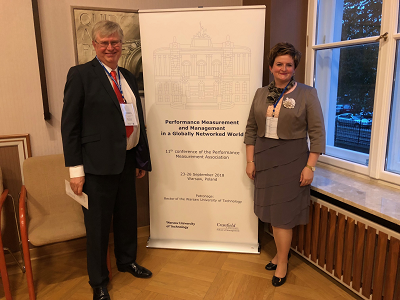
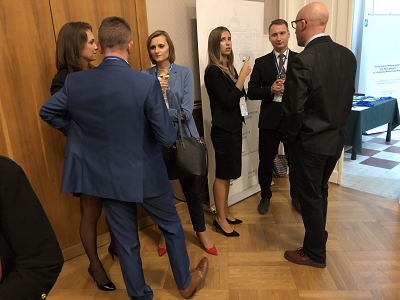
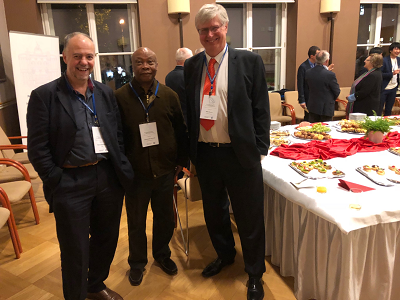
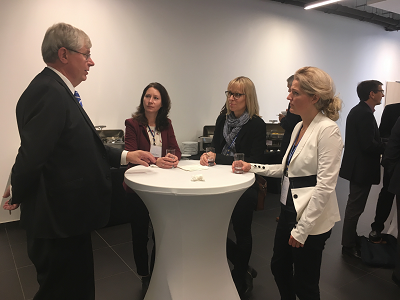
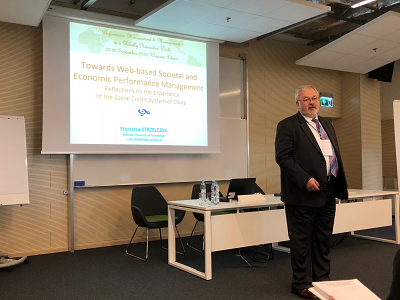
Delegates from more than thirteen different countries have been taking part in the 11th conference of the Performance Measurement Association in Warsaw, Poland. Hosted by the Warsaw University of Technology and chaired by Professor Mike Bourne from Cranfield University in the UK and Professor Stanislaw Marciniak from Warsaw, the topics ranged from a discussion of the social credit system introduced in China to “track” performance scores of people and organisations for the benefit of society, to a reflection on Japanese performance management and the ambitious project launched in Dubai to focus on improving education. Did you know Dubai now has a minister for well-being and happiness, a minster for the future and a minister for youth? Interestingly 45% of the population in Dubai is under the age of 29 and the minister for youth is, at the age of 23, the youngest minister in the world. People tend to think about performance measurement as being the preserve of the private sector, but there were several presentations on application in the public sector. Patrizia Garengo presented a review of performance in the public sector and presented the case of an effective Italian Court and Graham Smith talked about the dynamics of performance measurement in the Australian government.
There were sessions about leanness and quality, predictive models for marketing and sessions about sustainable business and reporting. Leadership was covered, too. Mike Bourne presented a “Greek Temple” diagram setting out characteristics needed for leadership of complex projects, based on research in international companies.
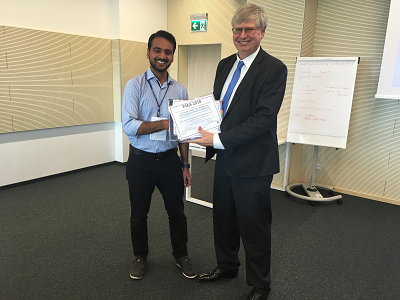
Awards were to be made, too. Highly commended papers were:
The moderating effects of management accounting capabilities on the relationship between contemporary performance measurement systems and organizational performance, Kazunori Fukushima, Chuo University, Japan & Takehiro Metoki, Musashi University, Japan
and
Is control fit for learning? How management control is implicated in organisational learning, Andrea Bellisario, Sandra Tillem & Martijn van der Steen from the Department of Accounting, FEB, Rijksuniversiteit Groningen, Netherlands.
Winners were:
Performance Management and Alliance Formation: A Narrative Perspective, Paul C. van Fenema Netherlands Defence Academy Bianca M. Keers, Defence Materiel Organization
and
A System-Wide Quality Improvement Maturity Model, Authors: Adeel Akmal, Richard Greatbanks and André M. Everett, Department of Management, University of Otago
And… what of the humming bird? The humming bird has evolved to be ideally suited to drawing nectar from flowers with its long, narrow beak. But, it’s not only the humming bird that has evolved. Flowers have adapted to enable the humming bird to draw not only nectar but also pollen which they transfer to other plants. So humming birds and plants have developed over time to each other’s advantage. This idea can be transposed into organisations as every organisation is affected to some extent by other entities with which it has a relationship. Patrick Hoverstadt ran a workshop explaining what this means in practice.
Slides from a selection of the presentations will shortly be available for conference delegates. These will include including Professor Stanslaw Strzelczak’s overview of web-based social and economic performance management in China, Dr Waafi Dawood’s presentation on a positive approach to organisational strategy and performance measurement in Dubai and Professor Shigeki Umeda’s reflections on performance management in Japan.
If you would like to know more about the Performance Measurement Association click here
PMA Conference 2018 Sponsorship
We gratefully acknowledge the support of:
Cranfield University.

Warsaw University of Technology.